
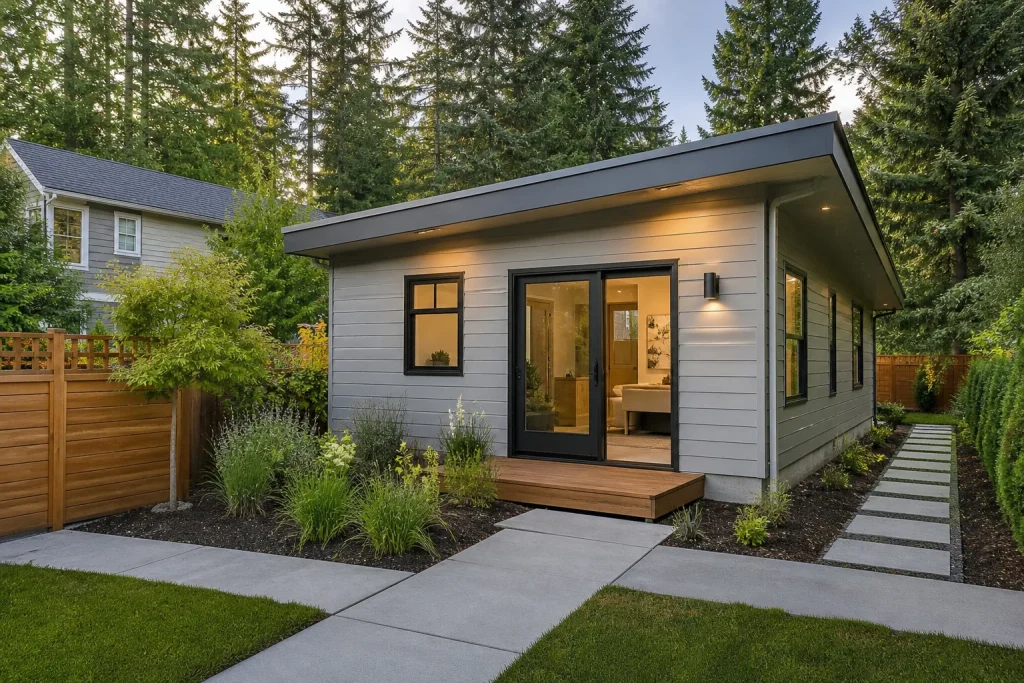
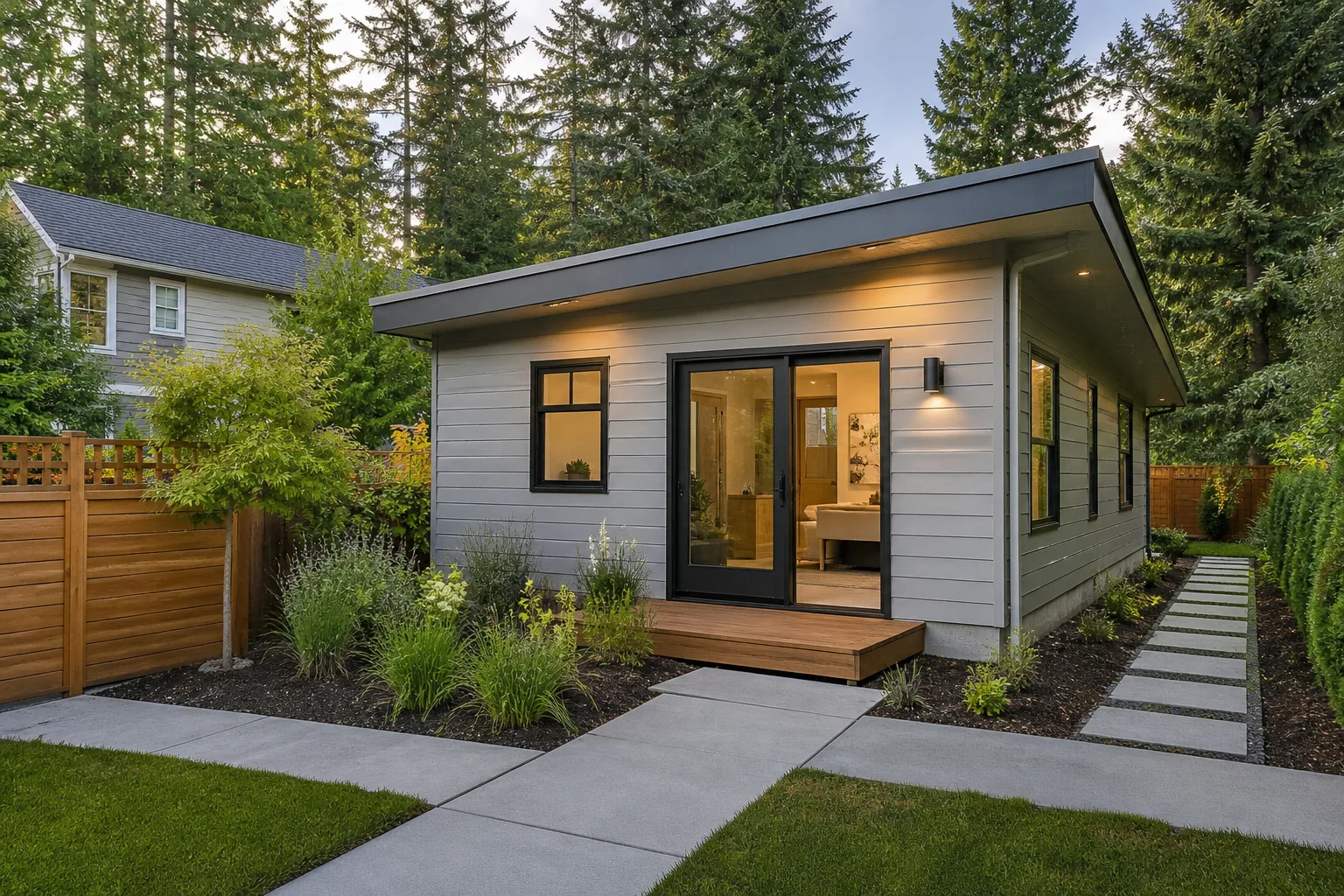
Cover ADU Builders in Bellevue: A Homeowner’s Guide
There’s no “ADU builder” license in Washington. Any general contractor with a residential construction endorsement can legally call themselves an ADU builder, which means the credential check most homeowners are told to run tells them almost nothing useful. What actually separates a builder who has navigated Bellevue’s permitting process from one who is testing it for the first time is harder to fake. This guide gives you the specific filters to tell the difference before you sign anything.
If you’d rather skip the detective work and talk it through, call (425) 699-8731. We answer 24/7.
Key Takeaways
- A Bellevue ADU permit history is public record, and it’s the fastest honest signal of real local experience.
- Ask who owns the design. In-house design means one accountable party when permit corrections come back.
- “We work with Abodu and Cover” means different things from different builders, so ask what their relationship actually is.
- An ADU-only builder structures scope, contracts, and pricing around one product type, not as a sideline to remodels.
- Three questions before any proposal will reveal how well a builder knows Bellevue’s permitting reality.
Why is Bellevue ADU permit history the best signal of a builder’s real experience?
Bellevue’s permit records are public, and they show which builders have actually pulled ADU permits in the city versus which ones talk about it. A builder can claim years of ADU work on their website. Their permit pull history in Bellevue tells you whether that work happened here, in this city, under this city’s review process. That’s the part most comparison advice misses.
Here’s how to check in under five minutes:
- Open the City of Bellevue’s online permit portal and search by the builder’s company name.
- Filter for accessory dwelling unit, detached ADU, or JADU permits. Look at how many come back and when they were issued.
- Check the permit status column. Approved and finaled permits mean the builder has been through the full review cycle, not just the application stage.
- Look for corrections history if the portal shows it. Every experienced builder gets corrections. The question is whether they’ve closed out complex ones before.
Bellevue’s housing stock ranges from mid-century ranch ramblers in neighborhoods like Bridle Trails to newer construction near downtown, and the lot constraints differ block to block. A builder with real Bellevue permit history has already run into the site-specific issues that a first-timer will discover mid-project. If you want to compare what a specialist brings to that check, our overview of ADU Builder Bellevue lays out the full process.
Does the builder own the design process, or outsource it?
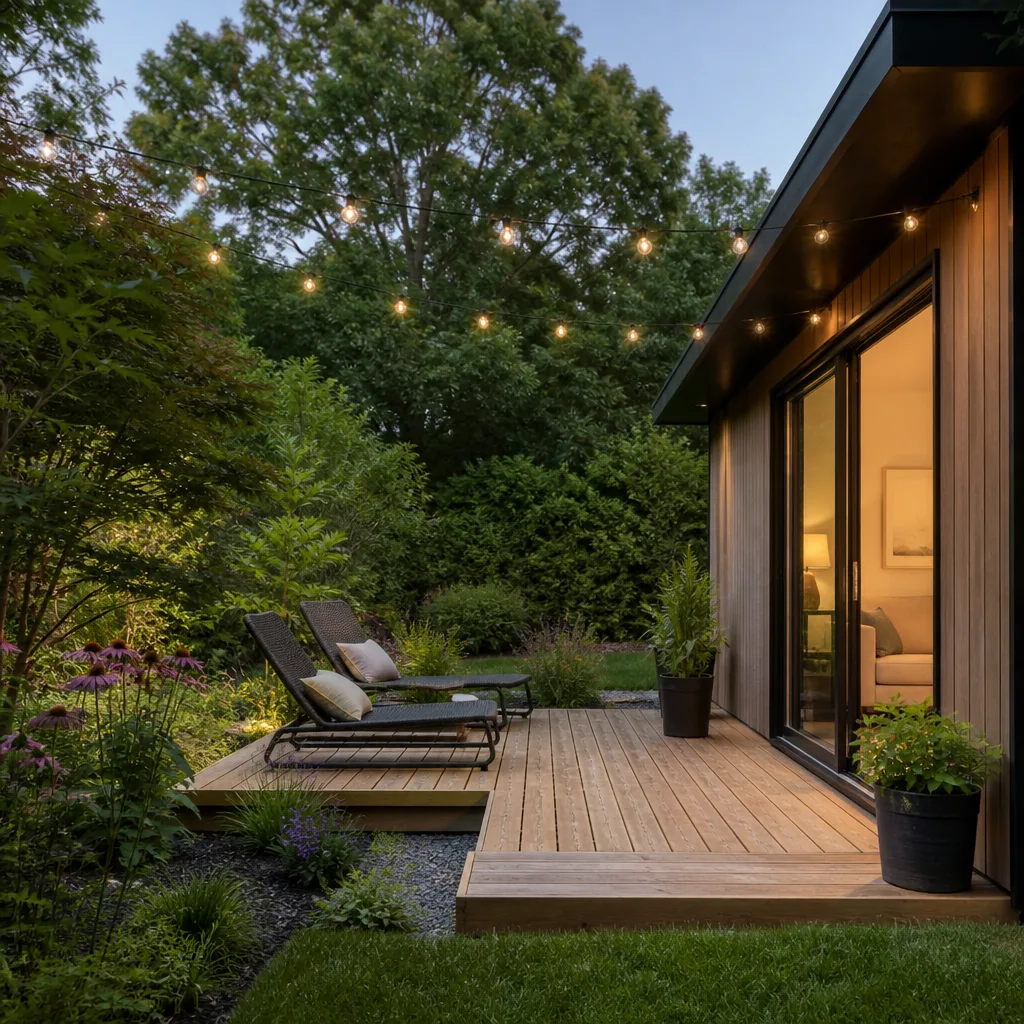
This single question filters the field fast, and it changes who is accountable when permit corrections arrive. If a builder outsources design to a third-party architect or draftsperson, then your project has at least two parties involved: the designer and the builder. When the city’s plan review sends back corrections, who owns the fix? Who is on the clock for the redesign? Who tells you the timeline just moved?
When design lives inside the same team that pulls the permit and builds the unit, there’s one point of accountability from the first sketch to the final inspection. In our experience, the coordination gap between separate design and build firms is where most ADU schedules quietly fall apart. The correction email lands in a shared inbox and sits there while each side waits for the other to act.
Ask directly: “Who draws the plans, and are they on your payroll or a subcontractor?” Then ask a follow-up: “If we get corrections from the city, who is responsible for the response and how is that priced?” A builder who owns design answers both without hesitation. A builder who brokers it will get vague. Bellevue projects that move cleanly almost always trace back to a single accountable team, which is the model we built around.
What do “prefab partnerships” actually mean in practice?
Plenty of builders list prefab brands on their site. Fewer can tell you what their relationship with those brands actually is. There’s a real difference between a builder who is an authorized partner with a manufacturer like Abodu or Cover and can quote you factory pricing directly, and a builder who simply refers you to a prefab company and adds a markup for the introduction. The first gives you genuine options. The second adds a layer without adding value.
To tell the difference, ask these questions:
- Are you an authorized or approved builder with this brand, or do you refer clients to them?
- Can you quote the prefab unit pricing directly, or does the manufacturer quote it separately?
- What’s included in your scope versus the manufacturer’s scope?
- Have you installed this specific model before, and can you point to the permit record?
We work with Abodu, Cover, and Dvele alongside fully custom site-built units, and the honest answer to “which is right” depends on your lot, your budget, and your timeline. A prefab unit makes sense on a flat, accessible lot where the factory lead time fits your plan. A custom build makes sense when the site is tight or the design needs to fit a specific use. A builder who can only offer one path will steer you toward it regardless. One who offers both can compare them honestly, and you get a real apples-to-apples look before you commit.
How does an ADU-only builder’s scope differ from a remodeling general contractor?
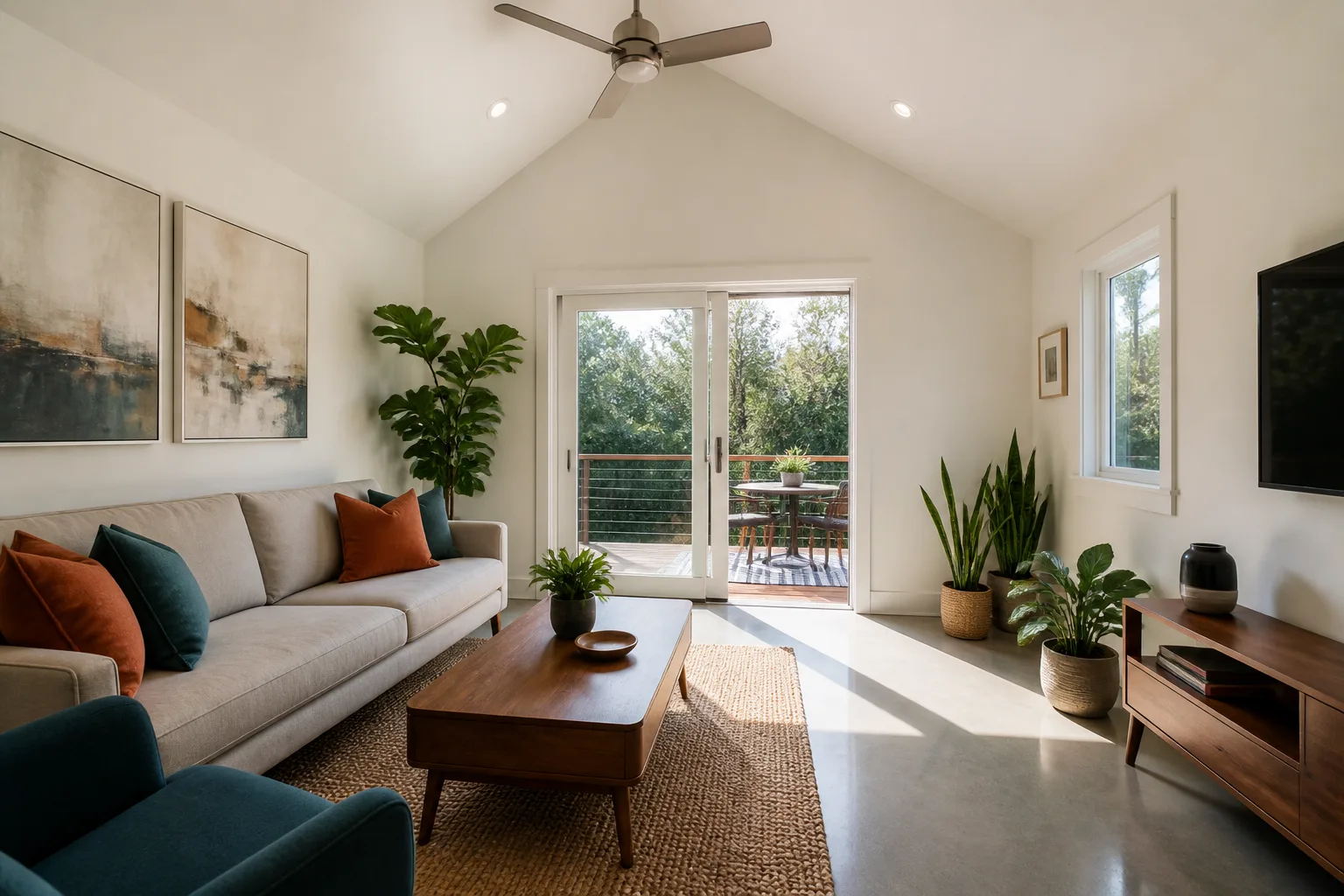
This is where the contract and process differences show up, and they matter more than a website headline. A remodeling general contractor who takes ADU jobs treats the unit as one more line in a menu that also includes kitchens, baths, and additions. An ADU-only builder has every process built around one product type. Those two businesses produce different contracts even when the plans look similar.
Watch for these structural differences:
- Scope clarity: An ADU-only builder can define scope precisely because they do it every project. A generalist tends to leave gaps that become change orders.
- Permit language: Look for a contract that names who pulls the permit and who owns correction responses. If it’s vague, assume you’ll be the coordinator.
- Utility and site work: Trenching, sewer, and electrical tie-ins are where ADU budgets drift. A specialist scopes these upfront; a generalist often discovers them later.
- Schedule assumptions: The schedule should be set in the written estimate, not promised verbally at the sales meeting.
Bellevue lots frequently have grade changes, mature trees, and utility placement that affect a standalone build, and a contractor who hasn’t hit those issues on similar Bellevue sites will price them as surprises. That’s the risk of a generalist taking an ADU as a side job. If your lot presents that kind of site challenge, a garage conversion can sometimes avoid the problem entirely, and a builder who offers both paths can tell you which one your lot actually supports.
The three questions to ask any Bellevue ADU builder before requesting a proposal
Ask these three before you ask for pricing, because the answers reveal real experience with Bellevue’s permitting and site realities faster than any sales pitch. A builder who has done this work in Bellevue answers in specifics. A builder who hasn’t answers in generalities.
- “How many ADU permits have you pulled in Bellevue specifically, and can I look them up?” The right answer is a number and an invitation to check the portal yourself. If the answer is “we’ve done a lot in the area,” press for the Bellevue count.
- “Who responds if the city sends plan review corrections, and how is that handled?” You want a named process and a named party, not “we’ll take care of it.” Corrections are normal. Getting them handled without a timeline slip is the test.
- “What site issues have come up on Bellevue lots like mine, and how did you scope them?” Grade, drainage, tree protection, and utility tie-ins are the recurring ones. A builder who has hit them on other Bellevue properties will name them before you do.
Those answers tell you more than a portfolio page. For smaller configurations, a junior ADU has its own rules and constraints, and a builder who handles the full spectrum will know when a JADU is the smarter path than a full standalone unit. That kind of matching, prefab versus custom, standalone versus conversion versus JADU, is what ADU builders who specialize in one product type are positioned to do well.
When to call a pro: If you’ve checked the permit history and it’s thin, or you’re getting vague answers on design ownership or corrections, that’s the moment to get a specialist on the phone rather than push forward on hope. Call (425) 699-8731. We answer 24/7. Fast dispatch from 7am to 7pm, Sunday through Friday.
Related services in Bellevue: Beyond standalone units, we handle garage conversions, junior ADUs, and home additions, and each one has a different permitting path worth understanding before you settle on a plan.
The Bottom Line
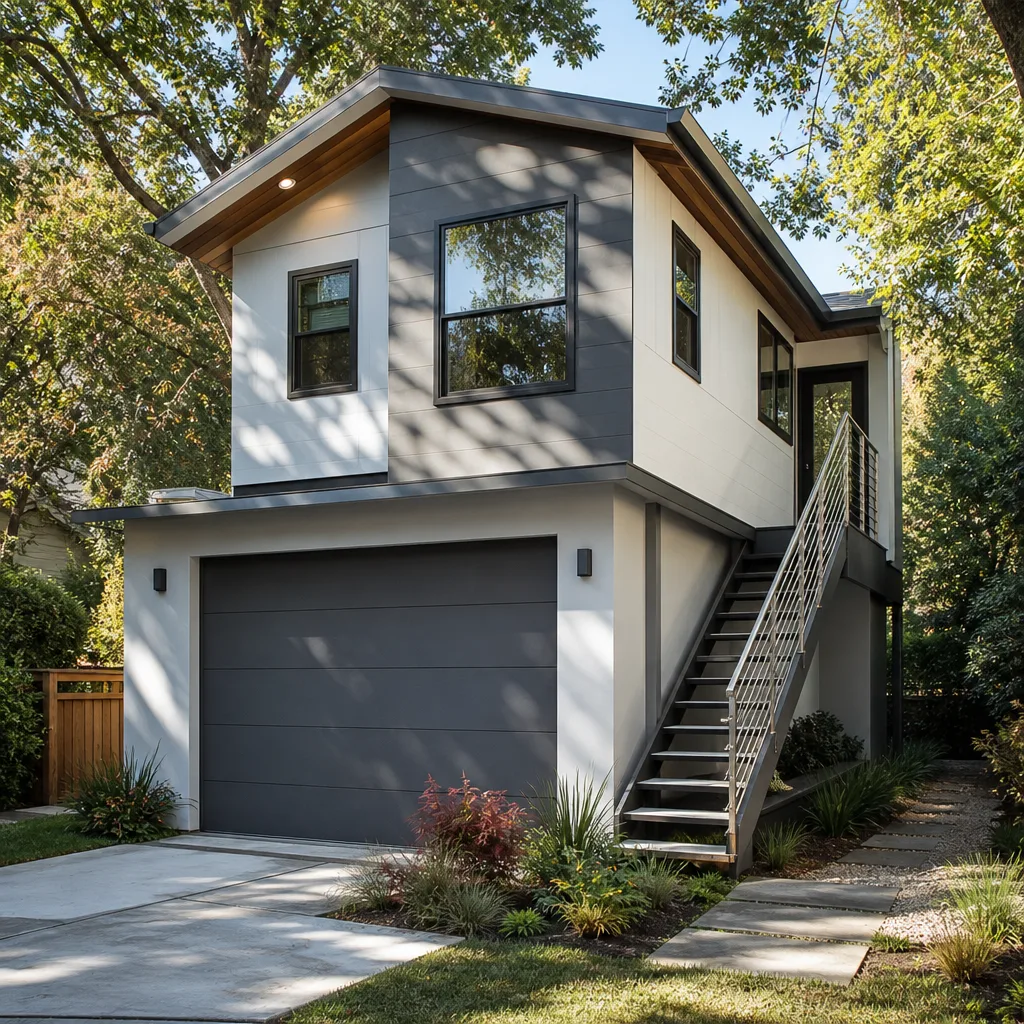
The credential most homeowners check first, the contractor license, isn’t the one that separates a real ADU specialist from an opportunist in Bellevue. The signals that matter are the permit pull history in the city, whether the builder owns design, what their prefab relationships actually deliver, and how their contracts are structured for one product type. The three questions in this guide will get you there, and checking the city permit portal takes five minutes and settles most of the debate.
Our technicians have up to 14 years of experience, and every project runs from blueprint to building permit to move-in day under one team, with permits handled and no surprises. If you’re in Bellevue and need help, ADU Builder Bellevue offers free estimates. Call (425) 699-8731 to schedule yours.
Frequently Asked Questions
No. Washington does not issue a distinct ADU builder license. Any general contractor with a residential construction endorsement can legally market themselves as an ADU builder, which means the license check only confirms they’re a licensed contractor, not that they’ve built ADUs. To verify real ADU experience, check the builder’s permit history in the City of Bellevue’s public portal. Call (425) 699-8731 for a free estimate and we’ll walk you through what we’ve pulled.
Search the City of Bellevue’s online permit portal by the builder’s company name, then filter for detached ADU, attached ADU, or JADU permits. Look at permit counts, dates issued, and whether permits reached finaled status rather than stalling at application. A builder with approved and finaled Bellevue ADU permits has been through the full review cycle here. Call (425) 699-8731 for a free estimate.
Prefab and custom ADU costs depend entirely on your lot, unit size, and site work, so there’s no single answer. Prefab units from brands like Abodu or Cover come with factory pricing that’s easier to compare, while custom builds price per job by written estimate. What matters is getting both paths quoted by the same builder so the comparison is real. Call (425) 699-8731 for a free estimate.
Permit review timelines vary by project type, lot conditions, and the city’s current review queue, so we don’t promise a fixed number of weeks. What we can tell you is that the schedule for your specific project is set in the written estimate before work begins, and that in-house design and permit handling reduce the back-and-forth that stretches timelines. Call (425) 699-8731 for a free estimate.
Written by the team at ADU Builder Bellevue.
Need ADU Help?
Call ADU Builder Bellevue - the local pro we connect you with is licensed and insured, here with fast help in Bellevue.
(425) 699-8731